An embedded computer is specialized computing hardware designed for a dedicated function within a larger system. Embedded computers power autonomous trucks, medical imaging systems, and factory automation lines. Unlike embedded systems (complete solutions including sensors and actuators), embedded computers are the computing core: CPU, memory, I/O, and storage in a self-contained package. They differ from microcontrollers (single-chip, limited resources) and general-purpose PCs (short lifecycle, generic design). Applications span autonomous truck telematics handling vast data streams, energy meter BLE connectivity, and retail behavior analysis at the edge.
Embedded Computer vs PC vs Microcontroller: Key Differences
Should you use a Raspberry Pi, an industrial embedded computer, or a microcontroller for your project?
Embedded computers occupy the middle ground between general-purpose PCs and microcontrollers. PCs offer flexibility but suffer from 6-12 month product lifecycles and generic thermal designs unsuitable for industrial environments. Microcontrollers excel at simple control loops but lack the processing power and OS support for complex multi-tasking.
| Feature | Embedded Computer | General-Purpose PC | Microcontroller | SoC |
| Purpose | Dedicated function in larger system | General computing tasks | Simple control loops | Integrated system-on-chip |
| CPU Power | Moderate to high | High | Low to moderate | Varies widely |
| Memory | 2-32 GB RAM typical | 8-64 GB RAM | KB to MB range | Integrated on die |
| Storage | eMMC, SATA SSD, NVMe | HDD, SSD | Flash (KB to MB) | Integrated or external |
| I/O Flexibility | Extensive (COM, CAN, GPIO) | Limited (USB, HDMI) | Moderate (GPIO, serial) | Depends on integration |
| Operating System | Linux, Windows IoT, RTOS | Windows, macOS, Linux | Bare metal or RTOS | Varies |
| Power Consumption | 5-65W typical | 65-125W | Milliwatts to watts | Highly integrated, low power |
| Cost | $200-$3,000+ | $500-$2,000 | $1-$50 | $10-$200 |
| Lifespan | 2-12 years availability | 6-12 months | 10+ years | Varies |
| Customization | High (carrier boards, I/O) | Low | Moderate (firmware) | Limited after fabrication |
Microcontrollers operate in milliwatts, embedded computers consume 5-65W depending on workload, and PCs draw 65-125W continuously. Lifecycle differences matter more than initial cost. Consumer PCs are superseded within 6-12 months, forcing software version management nightmares. Embedded computers offer 2-12 year availability with fixed BOMs.
Use microcontrollers for simple, repetitive control tasks. Choose embedded computers when you need OS support, complex I/O, and multi-tasking capabilities. Reserve PCs for development workstations and office environments.
Embedded Computer Form Factors: SBC, COM, Box PC, and Panel PC
EBX, PC104, COM Express: how do I choose?
Single Board Computer (SBC) integrates all components on one board. The 3.5-inch SBC complies with Embedded Compact Extended (ECX) form factor for compact applications. EBX is large enough to hold CPU, memory, mass storage interfaces, display controller, and serial/parallel ports. It’s popular where you have more x-y axis space and less z-axis height. Less dense connectors reduce cabling costs. PC104 encompasses original PC104, PC104-Plus, PCI-104, PCI104 Express, and PCIe104. After 30+ years, this stackable form factor dominates rugged military and industrial applications.
Computer-on-Module (COM) separates CPU and memory onto a module that plugs into a custom carrier board. Upgrade the CPU module without redesigning your entire carrier board. This approach reduces development risk and extends product lifecycle when processors become obsolete.
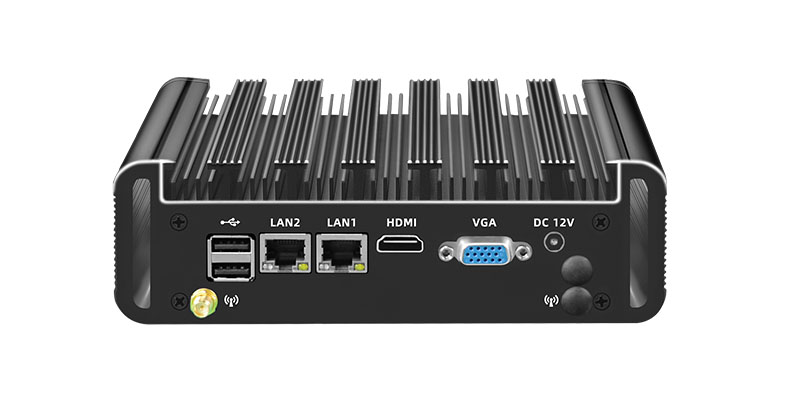
Box PC provides an enclosed system with mounting options for harsh environments. IPCmate’s rugged computing powers autonomous trucks, handling telematics and route planning in extreme vibration and temperature conditions. The enclosure protects components while providing standardized mounting interfaces.
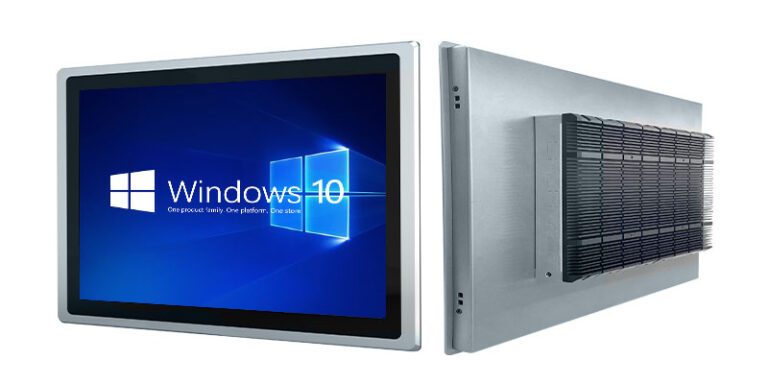
Panel PC integrates display and computer into a single unit. Common in HMI applications, kiosks, and retail environments where space is limited and user interaction is required. The all-in-one design simplifies installation and reduces cabling.
Selection criteria: Assess your available space in three dimensions. EBX works when you have x-y space but limited z-axis height. Evaluate connector density needs. Sparse connectors reduce assembly costs but require more board space. Consider expansion requirements. PC104’s stackable architecture allows modular expansion. Factor in environmental ruggedness. Military and extreme industrial applications justify PC104’s proven 30-year track record.
x86 vs ARM Processors: Power, Performance, and Trade-offs
x86 systems pay a 5-10% power penalty from Spectre and Meltdown security patches. Add 3-8W continuous UEFI and BMC overhead, and the power budget grows quickly.
ARM Cortex-M chips use minimal power in sleep mode, enabling battery-powered devices to operate for months or years without charging. A 12-core Qualcomm Snapdragon ARM CPU can match or outperform an Intel i5 or i7 in multi-threaded tasks while consuming significantly less power. This efficiency advantage makes ARM dominant in power-constrained applications.
x86 still leads in single-threaded performance and maintains compatibility with decades of legacy software. Industrial applications often depend on proprietary Windows software that won’t run on ARM without costly rewrites.
Security overhead differs architecturally. x86 SGX implements memory encryption with notable performance penalties. ARM TrustZone uses efficient secure world context switching with minimal overhead. The 5-10% power penalty from x86 security mitigations accumulates over time in always-on industrial systems.
| Metric | x86 | ARM |
| Single-thread performance | Higher | Moderate |
| Multi-thread efficiency | Good | Excellent |
| Power consumption (typical) | 15-65W | 5-25W |
| Sleep mode power | 3-8W (UEFI/BMC) | Milliwatts |
| Security overhead | 5-10% (patches) | Minimal (TrustZone) |
| Legacy software support | Extensive | Limited |
| Thermal output | Higher (requires active cooling) | Lower (fanless capable) |
Thermal characteristics favor ARM for fanless designs. Lower heat output simplifies thermal management and enables sealed enclosures without fans. x86 systems typically require active cooling or substantial heatsink mass.
Choose ARM for power-constrained, thermally-limited, or battery-powered applications where you control the software stack. Select x86 when legacy software compatibility matters more than power efficiency, or when maximum single-thread performance justifies the power budget.
Fanless Cooling and Thermal Management Strategies
Fanless design eliminates moving parts for silent, reliable operation in harsh environments. No fans means no bearing failures, no dust ingestion, and no acoustic noise.
Material science drives thermal performance. Aluminum dissipates heat quickly through high surface area. Copper conducts heat rapidly from source to spreader. Cincoze combines copper tubes and aluminum blocks to maximize heat transfer upward from the CPU and out through the chassis.
Thermal interface materials eliminate air gaps. Thermal pads between CPU and heatsink, and between heatsink and chassis, ensure effective heat transfer. Air is an excellent insulator. Eliminating air gaps can improve thermal transfer by 10-20%.
Component layout prevents heat soak interference. Neousys strategically positions components so heat from one doesn’t affect another’s operation. Memory modules placed away from CPU heat zones maintain stable operation. Power regulators positioned near chassis edges dissipate heat directly to the enclosure.
Chassis design maximizes surface area. Fins on the case increase radiating surface area by 300-500% compared to flat surfaces. The fin geometry balances surface area against airflow resistance in natural convection.
| Temperature Range | Application | Design Complexity |
| 0°C to +60°C | Standard industrial | Moderate |
| -20°C to +70°C | Extended industrial | High |
| -40°C to +85°C | Military, extreme | Very high |
Wide temperature operation enables deployment in extreme conditions. Standard industrial systems operate 0-60°C. Extended range systems handle -40°C to +70°C through meticulous thermal calculations and simulations. Military-grade systems reach -40°C to +85°C with custom thermal solutions.
Copper conducts at 400 W/m·K, aluminum at 205 W/m·K. Copper appears at heat sources while aluminum forms the radiating structure.
Fanless designs trade higher upfront engineering cost for long-term reliability and lower maintenance. In applications where access is difficult or downtime is costly, this trade-off pays dividends.
Industrial Communication Protocols: CAN, Modbus, EtherCAT
Choose CAN for automotive and complex real-time control, Modbus for simple PLC systems, EtherCAT for high-performance industrial automation. Protocol selection determines system architecture for years.
CAN bus was initially developed for automotive applications but now dominates industrial automation, medical devices, and aerospace. It excels at complex real-time control systems and large-scale data communication. The protocol’s robustness and deterministic behavior make it ideal when timing matters. Multiple nodes communicate without a master controller, providing inherent redundancy.
Modbus is predominantly used in PLCs and industrial automation devices. It caters to simpler data acquisition and device control needs. Modbus RTU (serial) and Modbus TCP (Ethernet) variants provide flexibility for different network topologies.
EtherCAT (Ethernet for Control Automation Technology) is a high-performance industrial Ethernet protocol specially designed for real-time industrial control systems. It’s part of the industrial Ethernet family including Profinet, EtherNet/IP, Powerlink, SERCOS III, and Modbus TCP. EtherCAT processes data on-the-fly as frames pass through each node, achieving microsecond-level synchronization.
CC-Link IE field is intended for I/O communications and motion control. It supports 254 nodes per network with control frames directly embedded in the Ethernet frame. Only ring topology is supported without switches. This provides network redundancy but limits scalability and makes cycle time dependent on the number of nodes.
| Protocol | Speed | Topology | Node Limit | Real-time Performance | Typical Application |
| CAN | 1 Mbps | Bus | 110 | Good | Automotive, medical |
| Modbus RTU | 115 kbps | Bus/Star | 247 | Moderate | PLCs, simple control |
| Modbus TCP | 100 Mbps | Star | Unlimited | Moderate | Industrial Ethernet |
| EtherCAT | 100 Mbps | Line/Ring | 65,535 | Excellent | High-speed automation |
| CC-Link IE | 1 Gbps | Ring only | 254 | Excellent | Motion control |
Protocol selection depends on real-time requirements, network topology constraints, and industry standards in your vertical. Automotive applications default to CAN due to proven reliability. Factory automation increasingly adopts EtherCAT for its performance and flexibility. Building automation often uses Modbus for its simplicity and low cost.
Real-World Applications: Case Studies with Outcomes
Industrial equipment manufacturers achieved decreased unanticipated downtime and maintenance expenses through embedded system monitoring.
Autonomous trucking: A major U.S. truck manufacturer implemented Premio’s rugged computing for autonomous route capabilities and in-vehicle telematics. The embedded system handles vast data streams from LIDAR, cameras, GPS, and vehicle sensors. Processing at the edge reduces latency for safety-critical decisions. The rugged design withstands constant vibration, temperature extremes from -40°C to +85°C, and years of continuous operation.
Energy utilities: Embien enabled energy meter reading using the eStorm-B1 BLE Module in very short time, helping the customer win the project. The embedded module provides wireless connectivity to legacy meters without extensive rewiring. Deployment time dropped from months to weeks. The BLE range limitation was acceptable for dense urban installations where meters are within 30 meters of collectors.
Industrial power equipment: A manufacturer decreased downtime and maintenance expenses while providing complete monitoring and control. Embedded computers collect real-time data on voltage, current, temperature, and vibration. Predictive maintenance algorithms identify failing components before catastrophic failure. The result: 40% reduction in unplanned downtime and 25% lower maintenance costs.
Legacy modernization: Embien helped a Russian industrial automation major run legacy code on ARM-Linux with Mono .NET Framework. The customer avoided a complete software rewrite while gaining ARM’s power efficiency benefits. Migration took 6 months versus 2+ years for a full rewrite. The embedded system maintained compatibility with existing PLCs and SCADA systems.
Retail analytics: The NUC Ultra 300 BOX transforms retail stores to analyze customer behavior in real-time. Embedded computers process video streams locally, identifying traffic patterns, dwell times, and product interactions. Privacy is maintained by processing data at the edge without transmitting video to the cloud. Retailers optimize store layouts and staffing based on actual behavior data.
Edge AI: BCM’s HPS-RX880W2A is a 2U rackmount system, Intel ESQ qualified, delivering maximum AI acceleration in performance-intensive edge environments. The system processes machine vision, deep learning inference, and sensor fusion locally. Latency drops from 100-500ms (cloud) to 5-20ms (edge). Applications include quality inspection, autonomous vehicles, and real-time anomaly detection.
Embedded computers enable data-driven decision making at the edge, reducing latency and improving operational efficiency. Processing locally eliminates cloud dependency and reduces bandwidth costs.
Certifications and Compliance: Medical, Automotive, Railway, Military
Discovering certification requirements after design completion can force expensive redesigns and delay time-to-market by 6-12 months. Plan for compliance from day one.
Medical: ISO 13485 establishes quality management system requirements for medical device manufacturers. IEC 60601 specifies safety and essential performance requirements for medical electrical equipment. Manufacturers offering pre-certified platforms include Axiomtek, Arbor Technology, AValue, and Winmate. Using certified hardware accelerates FDA approval and reduces testing costs by 30-50%.
Military: MIL-STD-810G defines environmental engineering considerations including temperature extremes, humidity, shock, vibration, and EMC. Testing validates operation from -40°C to +85°C, 95% humidity, 40G shock, and 5G vibration. Manufacturers with military-grade offerings include Winmate, Arbor Technology, Cincoze, and Neousys.
Railway: EN50155 specifies electronic equipment used on rolling stock, covering harsh environment suitability including temperature, vibration, shock, and EMC. EN 45545 addresses fire protection on railway vehicles, mandating flame-retardant materials and smoke toxicity limits. Railway certification is critical for train control systems, passenger information displays, and onboard diagnostics.
Automotive: In-vehicle systems face increasingly stringent requirements for functional safety (ISO 26262), EMC (CISPR 25), and environmental durability. Automotive-grade components must withstand 150°C junction temperatures and 15+ year operational lifetimes. The certification burden explains why automotive embedded computers cost 2-3x consumer equivalents.
| Certification | Testing Duration | Typical Cost | Key Requirements |
| ISO 13485 | 3-6 months | $25,000-$75,000 | Quality management system |
| IEC 60601 | 6-12 months | $50,000-$150,000 | Electrical safety, EMC |
| MIL-STD-810G | 6-12 months | $50,000-$200,000 | Environmental extremes |
| EN50155 | 4-8 months | $30,000-$100,000 | Railway environment |
| ISO 26262 | 12-24 months | $100,000-$500,000 | Automotive functional safety |
Engage with manufacturers offering pre-certified platforms to accelerate compliance and reduce risk. Axiomtek, Cincoze, and Neousys maintain certification documentation and test reports that streamline your approval process. The premium for certified hardware (typically 20-40%) is far less than the cost of late-stage certification discovery.
Lifecycle Management and Obsolescence Planning
Consumer-grade PCs are superseded within 6-12 months, forcing industrial users to manage multiple software versions and costly hardware changes. This chaos is avoidable.
Extended lifecycle: Embedded computers offer 2-12 year availability versus consumer PCs’ 6-12 months. Industrial suppliers commit to long-term production runs because their customers deploy thousands of units over years. A factory automation system installed in 2026 needs replacement parts in 2035. Consumer PC suppliers can’t make that commitment.
Fixed bill of materials: Industrial suppliers lock component specifications for the entire product lifecycle. The CPU, chipset, memory, and I/O controllers remain constant. This eliminates software requalification when you order units 3 years apart. Consumer PCs change components quarterly, breaking driver compatibility and forcing software updates.
Software stability: A single OS image works across your entire deployment when hardware doesn’t change. You test once, deploy thousands of times. Consumer PCs require version management: different drivers for different hardware revisions, different BIOS versions, different chipsets.
Obsolescence planning: Industrial suppliers provide proactive end-of-life notifications, typically 12-18 months advance notice. This allows planned migrations rather than emergency redesigns. You have time to qualify replacement hardware, port software, and schedule production transitions.
Last-time-buy opportunities: When a product reaches end-of-life, suppliers offer last-time-buy windows. Purchase buffer stock to cover warranty repairs and field replacements. This bridges the gap until your next-generation design is ready.
| Lifecycle Aspect | Consumer PC | Embedded Computer |
| Product availability | 6-12 months | 2-12 years |
| BOM stability | Changes quarterly | Fixed for lifecycle |
| EOL notification | None or 30 days | 12-18 months |
| Last-time-buy | Rarely offered | Standard practice |
| Software requalification | Every hardware revision | Once per lifecycle |
| TCO impact | High (frequent redesigns) | Low (planned transitions) |
Cost of mid-life redesign: $100,000-$500,000 for engineering, testing, and requalification. Extended lifecycle premium: 20-40% higher unit cost. Break-even occurs at 200-500 units depending on complexity. For deployments exceeding 500 units, extended lifecycle pays for itself.
Factor lifecycle costs into TCO calculations. The cheapest unit price often yields the highest total cost when you account for redesigns, requalification, and support complexity. Extended availability premium is insurance against obsolescence chaos.
Frequently Asked Questions
Is embedded systems still a good career in 2026?
Yes, embedded systems remains a viable and growing career path. The field continues to evolve with AI integration, edge computing, and IoT expansion. While AI concerns are valid, hardware and embedded systems work requires deep understanding of physical constraints, real-time systems, and hardware-software integration that AI cannot fully replicate. The field is expanding, not contracting, as more devices gain intelligence and connectivity.
What development tools and SDKs do I need?
Development tools depend on your operating system choice. Embedded Linux uses Yocto Project or Buildroot for custom distributions. Windows IoT relies on Visual Studio and the Windows IoT SDK. RTOS platforms use vendor-specific IDEs like IAR Embedded Workbench or Keil MDK. Cornell University’s entire Digital Systems Design course uses the RP2040 chip (Raspberry Pi Pico) as an educational starting point. Cross-compilation toolchains, debuggers (JTAG/SWD), and version control are universal requirements.
What are typical power consumption ranges?
Power consumption varies significantly by workload and processor architecture. AGV applications typically consume 6W for basic navigation and control. Deep learning and machine vision applications draw 25-65W depending on GPU acceleration requirements. ARM processors generally consume 30-50% less power than equivalent x86 systems for the same workload. A 20W difference over 24/7 operation costs $150-$200 annually in electricity and cooling at industrial rates.
How much do embedded computers cost?
Prices range from $200 for basic SBCs to $3,000+ for rugged box PCs with certifications. Entry-level 3.5-inch SBCs start around $200-$400. Mid-range box PCs with industrial I/O cost $800-$1,500. Rugged systems with wide temperature operation and certifications reach $2,000-$3,000. Military-grade or railway-certified systems exceed $3,000. Factor in lifecycle costs, not just unit price. A $1,000 system with 10-year availability costs less than a $400 system requiring redesign every 2 years.
Can I use an Apple laptop for embedded development?
Limited compatibility makes Apple laptops challenging for embedded firmware development workflows. Many embedded toolchains, debuggers, and programming interfaces are optimized for x86/Linux or Windows environments. Cross-compilation toolchains often lack macOS support or require complex workarounds. JTAG debuggers and programming adapters frequently lack macOS drivers. x86 or Linux workstations remain the preferred choice for embedded development due to superior toolchain compatibility and community support.
What storage options are available?
Embedded computers offer multiple storage options depending on performance and reliability requirements. eMMC provides onboard storage soldered directly to the board, offering good reliability and moderate performance. SATA SSDs deliver higher capacity and performance with standard interfaces. M.2 NVMe provides maximum performance for data-intensive applications. MicroSD cards offer removable storage for configuration and logging. The trend is toward hybrid configurations: eMMC for the operating system (reliability) plus NVMe for data storage (performance). Industrial-grade storage includes wear leveling, power-loss protection, and extended temperature operation.
How do I avoid common selection mistakes?
Don’t underestimate thermal requirements. Calculate actual heat dissipation needs including worst-case ambient temperature and solar loading. Verify I/O count early in the design process. Running out of COM ports or GPIO pins forces expensive redesigns. Confirm certification needs upfront. Discovering medical or railway certification requirements after hardware selection delays projects by 6-12 months. Plan for lifecycle from day one. Choosing consumer-grade components for a 10-year deployment guarantees obsolescence problems. Engage with industrial suppliers offering extended availability, fixed BOMs, and proactive EOL notifications. The 20-40% premium for industrial-grade hardware is far less than the cost of mid-life redesigns.